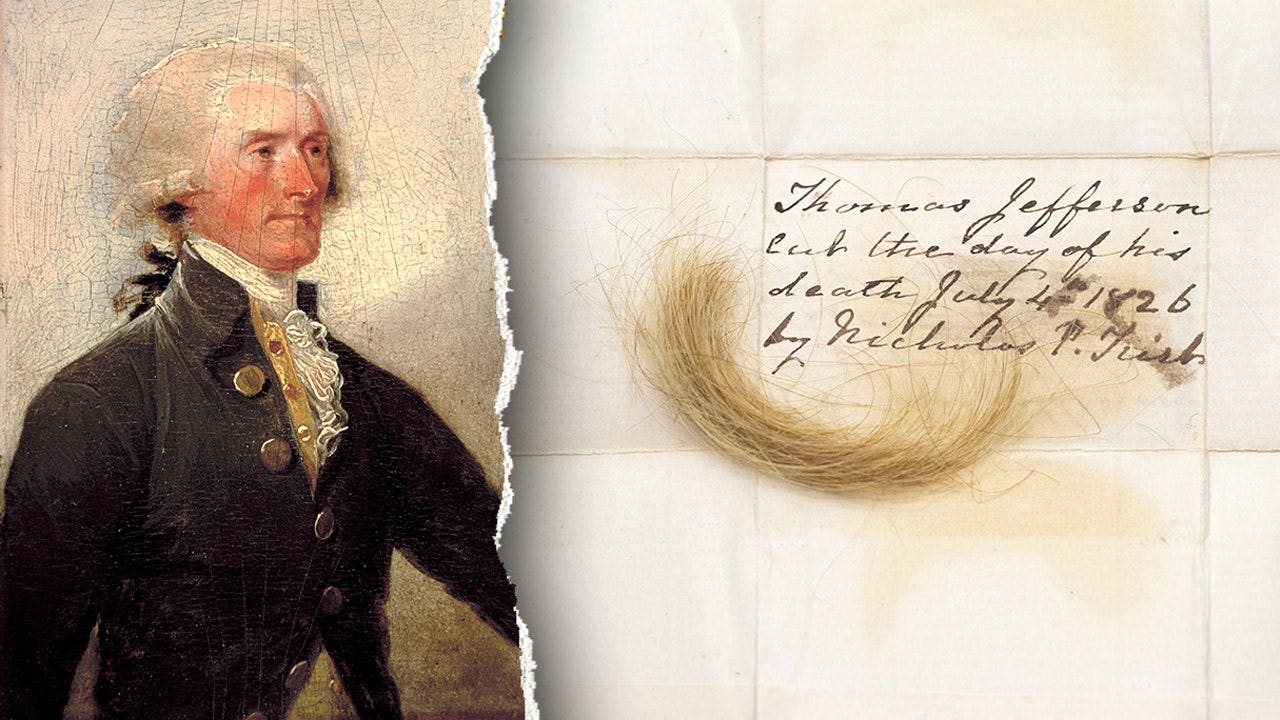
A recent DNA analysis has provided new evidence in the long-standing debate over the paternity of Sally Hemings' children, who were enslaved by Thomas Jefferson at Monticello.
The study, which will be detailed in a forthcoming book by anthropologist Richard Kurin, analyzed strands of hair linked to Jefferson, including a lock of hair found between the pages of an unpublished manuscript associated with him. By comparing the genetic material to that of Hemings' children, researchers were able to model competing paternity scenarios involving Jefferson, his brother Randolph, and Randolph's sons.
The analysis found that the odds that Jefferson did not father Madison and Eston Hemings were less than one in 1,000. The Thomas Jefferson Foundation, which owns and operates Monticello, said in a statement that the findings reinforce the historical record, rather than changing it.
Historians have long concluded that Jefferson fathered children with Hemings, a conclusion supported by a 1998 DNA study. However, some had questioned the accuracy of that study, suggesting that Jefferson's brother Randolph may have been the father of Hemings' children. The new evidence appears to rule out this alternative theory.
Leigh Fought, a historian and author of the book "Sally Hemings: Given Her Time," said the new evidence "closes the case" and reinforces the historical record. Fought noted that the story offers an opportunity to focus on Hemings herself and the choices she faced while enslaved at Monticello.
NTC Report coverage is based on reporting from the original publisher.
View original reporting →