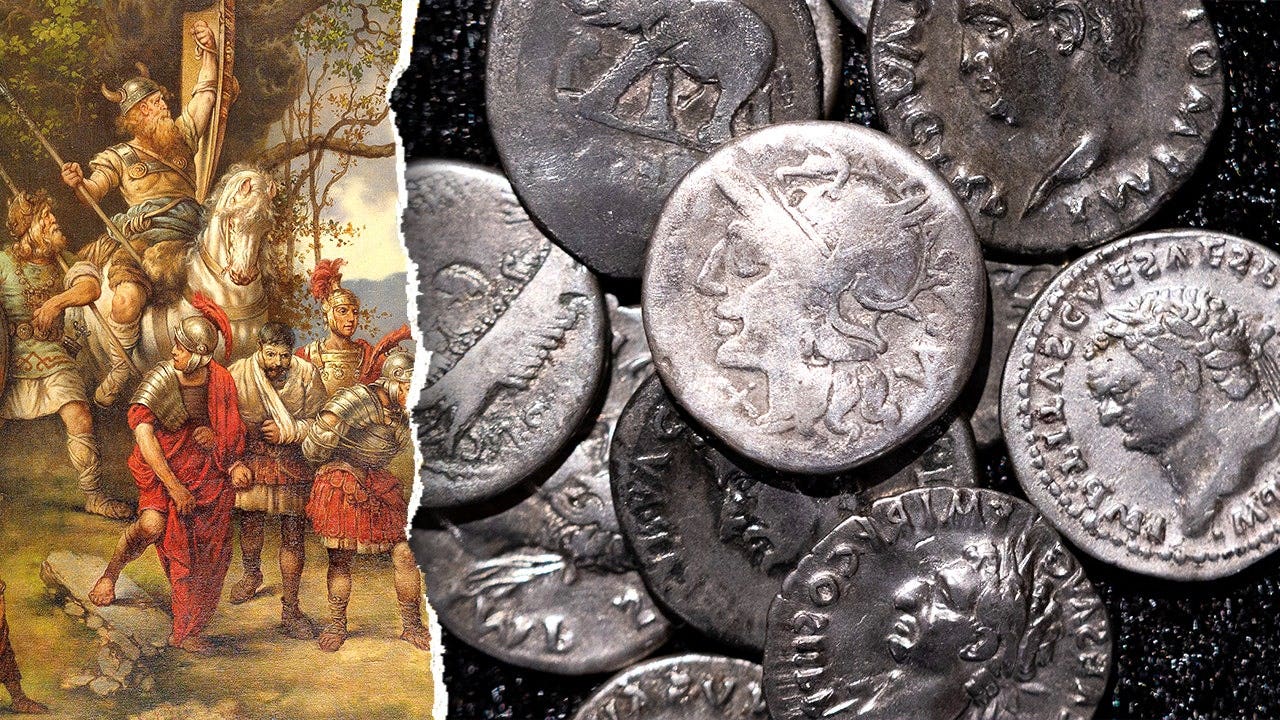
A man using a metal detector in a field near Wesseling, south of Cologne, Germany, made a remarkable discovery last year. Oliver Riedl, a licensed metal detectorist, uncovered 934 ancient Roman silver coins, which are believed to have been buried intentionally between 125 and 150 A.D.
The coins, which are currently on display at the LVR-LandesMuseum Bonn, weigh 6.8 pounds and are considered the largest Roman coin hoard from the reign of Roman Emperor Hadrian ever found in Germany. According to Johannes Wienand, a professor of ancient history at the Technical University of Braunschweig, the hoard is "a huge treasure" and a "time capsule of the money the people in that period actually used day by day."
Wienand noted that a Roman legionary would have earned a gross salary of around 300 denarii per year, meaning the hoard was roughly equivalent to three years of a soldier's gross salary. He suggested that the hoard may have been someone's life savings, possibly a Roman soldier who saved money for his retirement.
The discovery was made in a rural area near the Rhine frontier, which marked a border of the Roman Empire at the time. While a military connection is possible, Wienand said the identity of the hoard's owner remains unknown.
The discovery highlights the importance of responsible metal detecting and reporting archaeological finds. Riedl, who immediately alerted archaeological authorities after realizing more coins were buried beneath the surface, is credited with contributing to an orderly exploration of the find.
NTC Report coverage is based on reporting from the original publisher.
View original reporting →