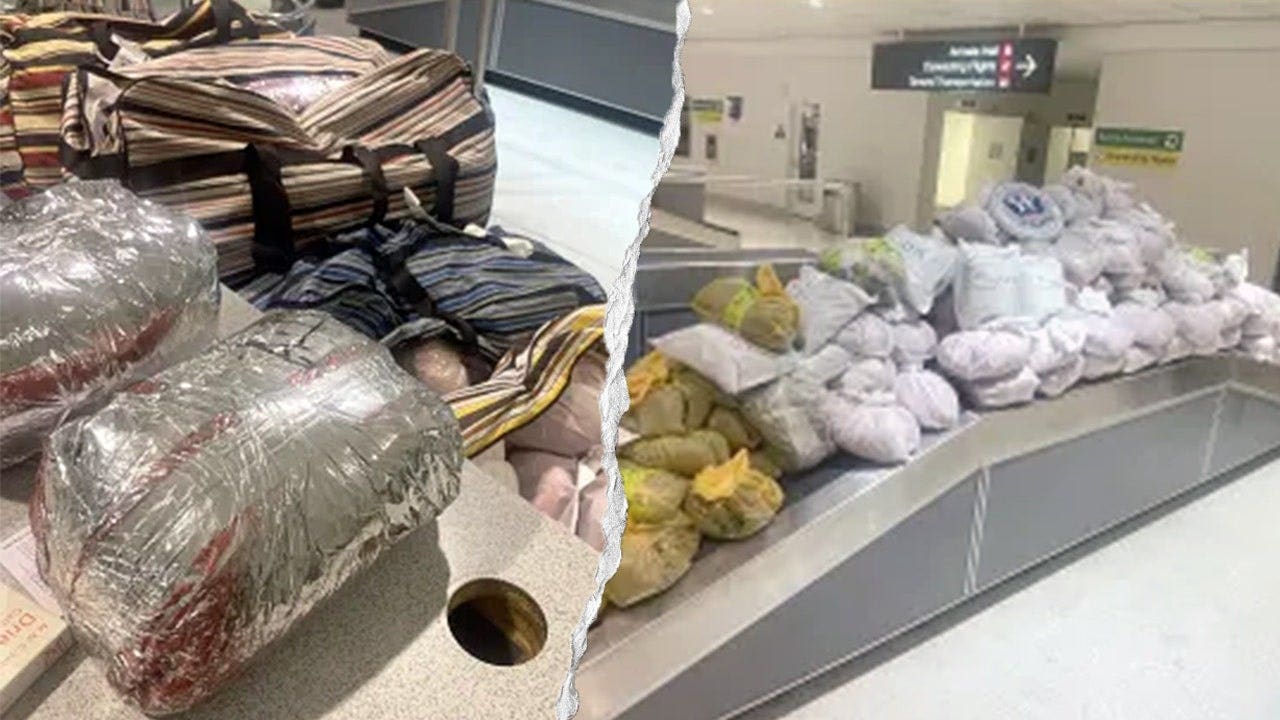
Two travelers arriving from London were found to have packed nearly 850 pounds of khat into 12 suitcases when they arrived at Baltimore/Washington International Thurgood Marshall Airport on August 13. The two U.S. citizens from New York were referred for secondary inspection, during which customs officers discovered what appeared to be a large quantity of tea leaves.
Further examination revealed that the material was actually khat, or Catha edulis, a plant native to East Africa and the Arabian Peninsula that is often chewed for its amphetamine-like effects. The seized material weighed approximately 847 pounds and had an estimated street value of about $100,000.
Each traveler had six soft-sided suitcases filled with khat, according to authorities. The men were released pending further investigation. Khat contains two central nervous system stimulants: cathinone, a Schedule I controlled substance, and cathine, a Schedule IV controlled substance.
Symptoms of khat toxicity can include delusions, loss of appetite, difficulty breathing, and increased blood pressure and heart rate, according to the Drug Enforcement Administration. The World Health Organization classified khat as a drug of abuse in 1980.
This seizure is part of an ongoing effort by Customs and Border Protection officers to intercept large quantities of khat being smuggled into the country. In recent months, CBP has seized multiple shipments of khat at the same airport, including one case where officers "spooked" a suspected smuggler who fled the inspection station and left the khat behind.
NTC Report coverage is based on reporting from the original publisher.
View original reporting →