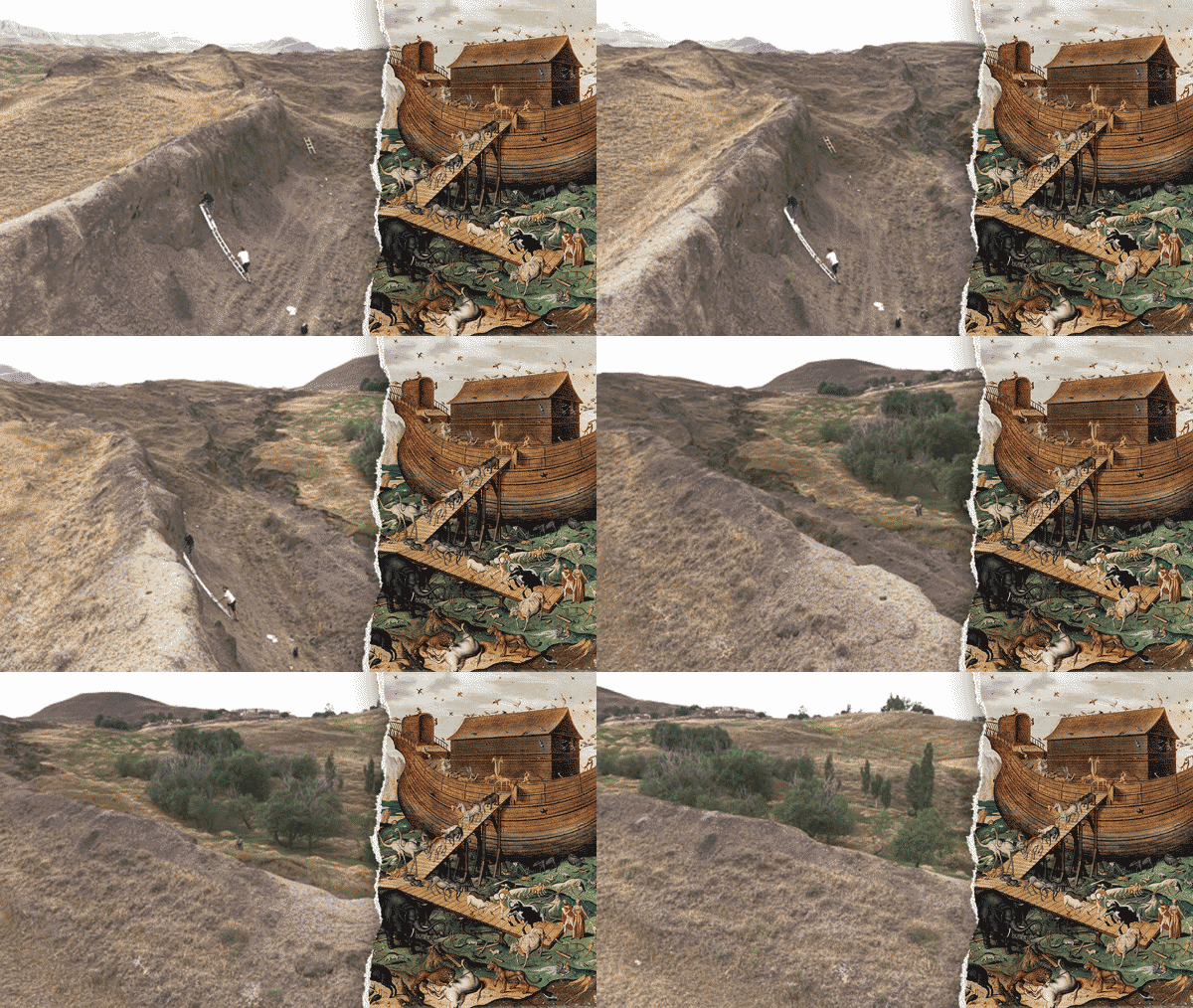
A team of researchers investigating a boat-shaped formation in eastern Turkey says new evidence is strengthening its case that the site could hold the remains of Noah's Ark.
The team, led by Noah's Ark Scans founder Andrew Jones, has been conducting soil analysis and drilling at the Durupınar formation, a 538-foot-long geological structure near Mount Ararat. The site has long fascinated Ark hunters due to its shape and proximity to the region identified in the biblical account.
Critics have maintained that the formation is naturally occurring, but Jones said recent drilling, soil sampling, and ground-penetrating radar have given his team new reasons to challenge that conclusion. The team has core drilled over 12 locations and found rich black soil, which they plan to test for organic content this winter at Ankara University.
According to Jones, the drilling uncovered large deposits of highly rich black soil, which he believes could be indicative of decayed wood. The researchers hope the analysis will help determine whether there are signs of human activity or materials consistent with decayed wood beneath the formation.
Jones also pointed to a 2024 soil survey that contained three times more organic matter inside the boat-shaped formation than samples collected just outside it. The team is awaiting the results of the soil analysis, which they expect to confirm their findings by this winter.
NTC Report coverage is based on reporting from the original publisher.
View original reporting →