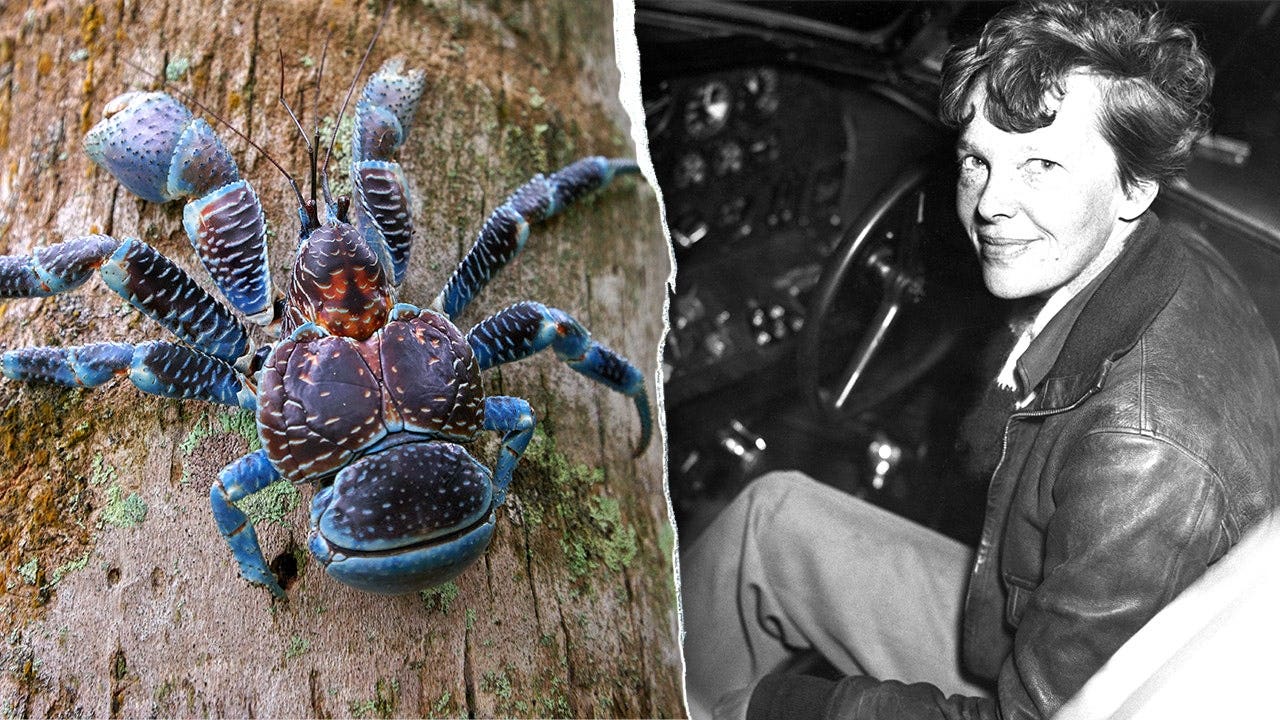
A team of researchers searching for the remains of Amelia Earhart on the remote Pacific island of Nikumaroro has encountered a unique challenge: massive meat-eating coconut crabs. The 17-person expedition team, led by Purdue University, arrived on the island on Monday evening after a five-day voyage across the Pacific.
According to Purdue University, the team has decided to sleep aboard its vessel, the Marin Mainiku, rather than on the island, citing the presence of the enormous crustaceans as one reason for the decision. The university stated that the crabs' size and overnight activity made staying on the island impractical.
Researchers on the team have already encountered at least four coconut crabs while clearing an overgrown trail to the island's lagoon. The path, nicknamed the "Gallagher Highway," had become heavily overgrown since the last expedition, forcing researchers and crew members to use machetes and hand chainsaws to clear a route. Despite the encounters, the university said the crabs posed no threat to the operation.
The coconut crab is considered the largest terrestrial arthropod, according to a 2011 report from the U.S. Geological Survey. The species is omnivorous and has powerful pincers capable of cracking through the tough exterior of a coconut. The crabs' claws have serrated edges that function like teeth, allowing them to break open hard shells.
The team remains focused on their mission to investigate a mysterious anomaly detected in satellite imagery that some researchers believe could be Earhart's missing Lockheed Electra. The search is rooted in the Nikumaroro Hypothesis, which suggests Earhart's aircraft went down near the remote Pacific island.
NTC Report coverage is based on reporting from the original publisher.
View original reporting →