
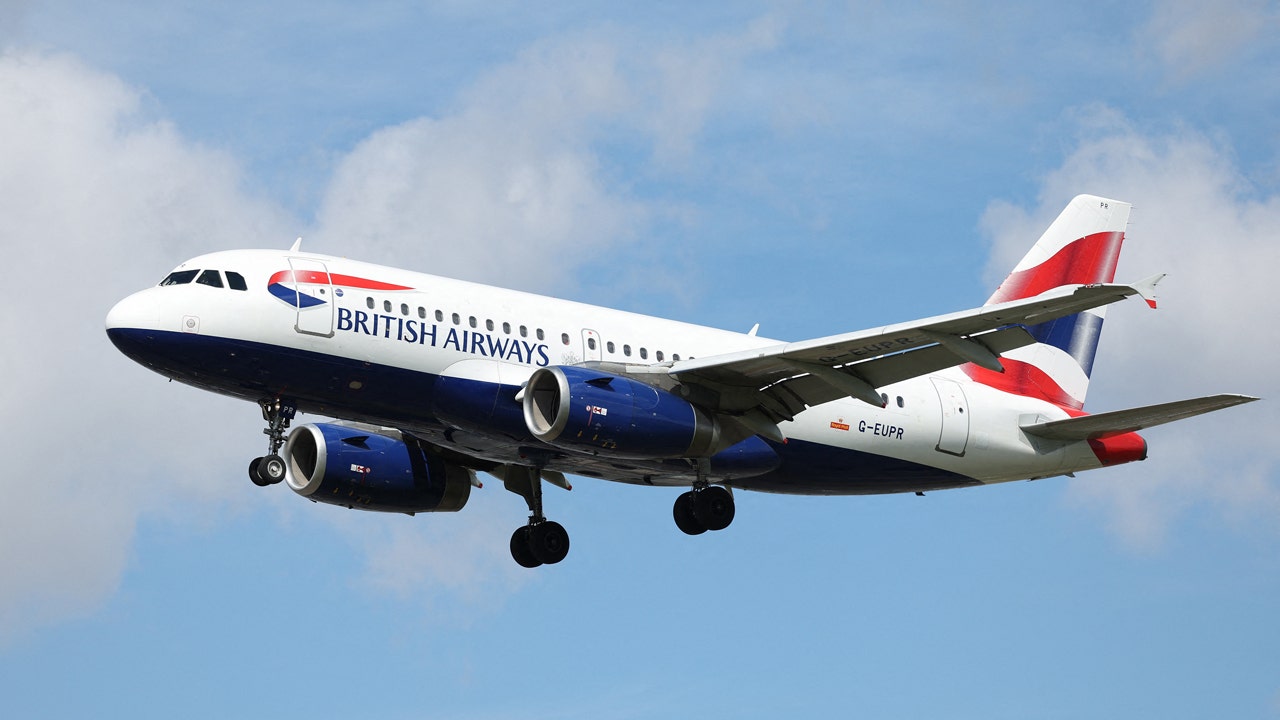
A British Airways flight from London Heathrow Airport to Chicago experienced a sudden drop in altitude shortly after takeoff, descending approximately 27,000 feet to around 9,000 feet, according to reports.
The Boeing 777, which was carrying passengers bound for the US, turned back towards London and spent several hours circling in the air before eventually returning to Heathrow. A British Airways spokesperson stated that the aircraft landed safely after a "technical issue" was encountered, and that the safety of passengers and crew was the airline's top priority.
The flight-tracking website FlightAware showed the aircraft's unusual flight pattern, with the plane remaining airborne for several hours after turning back towards London. An expert in aviation, Matthew "Whiz" Buckley, a retired US Navy F/A-18 fighter pilot, suggested that the flight pattern was consistent with an emergency descent, possibly due to a pressurization problem.
Buckley noted that getting the aircraft below 10,000 feet would eliminate the need for supplemental oxygen if cabin pressure had been lost. He praised the pilots for following standard procedures, saying "it sounds like everything worked as advertised." However, he acknowledged that the experience would be unsettling for passengers, particularly if oxygen masks were deployed.
The decision to circle the aircraft for several hours has raised questions about why it did not immediately land. Buckley explained that a plane carrying a significant amount of fuel would need to reduce its weight before returning to the runway, and that circling while burning fuel was a safe and common procedure in such situations.
NTC Report coverage is based on reporting from the original publisher.
View original reporting →

